According to the latest figures released by the Ghana Statistical Service, Ghana’s inflation rate increased for the third straight month, rising from 3.7 percent in May to 5.3 percent in June.
After several months of fairly mild inflation, this indicates a new increase in consumer prices.
The higher non-food prices were primarily responsible for the most recent increase in headline inflation.
Dr. Alhassan Iddrisu, the Government Statistician, said food inflation rose to 3.9% in June from 3.3% in May, while non-food inflation increased more sharply to 6.3% from 4.1% over the same time frame.
Inflation, despite the monthly rise, is still much lower than the 13.7 percent recorded in June 2025, suggesting that overall price pressures are continuing to decrease year on year.
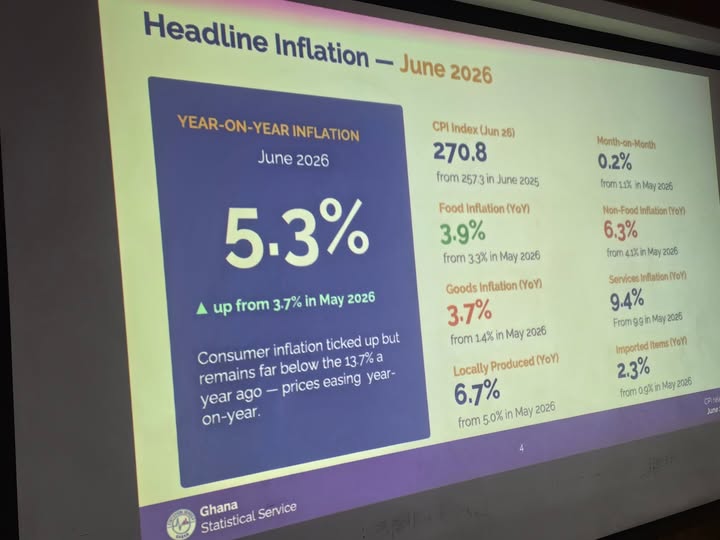
In June, inflation for domestically produced items increased to 6.7% from 5.0% in May, representing 86.6% of headline inflation, according to the statistics. Over the same time, inflation for imported goods rose from 0.9% to 2.3%.
The services industry experienced greater price growth than the commodities sector. Services inflation was 9.4%, a minor decrease from 9.9% in May, while goods inflation surged to 3.7% from 1.4%.
“This implies that pressure is coming from services, transit, rent, education, lodging, and other food and non-food costs. The Government Statistician said, “Fifthly, local items account for the majority of the inflation.” The North East Region registered the highest inflation rate at 10.2% at the regional level, followed by the Bono East Region, which had the lowest rate at -4.4%, indicating an overall decrease in average prices during the period.
About the Author