
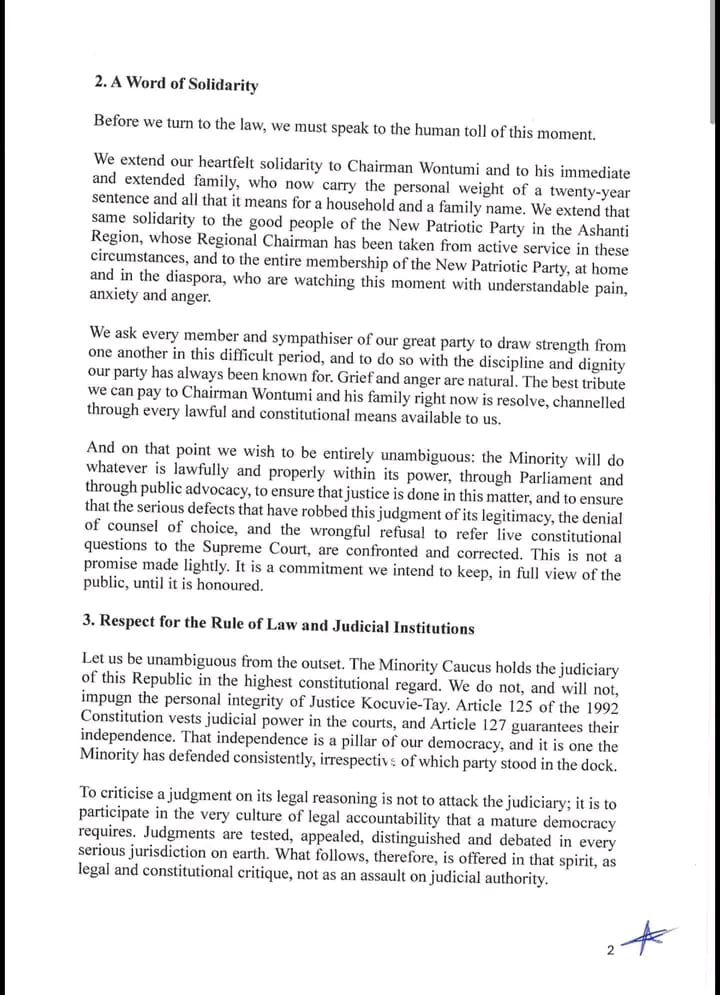
Parliament’s Minority Caucus has voiced strong constitutional objections to the 20-year prison sentence imposed on Bernard Antwi-Boasiako, commonly known as Chairman Wontumi, the Ashanti Regional Chairman of the New Patriotic Party (NPP), calling the judgment a miscarriage of justice.
In a decision given by Justice Audrey Kocuvie-Tay at the High Court in Accra, Chairman Wontumi and his company, Akonta Mining Limited, were found guilty on two charges each under the amended Minerals and Mining Act, 2006 (Act 703).
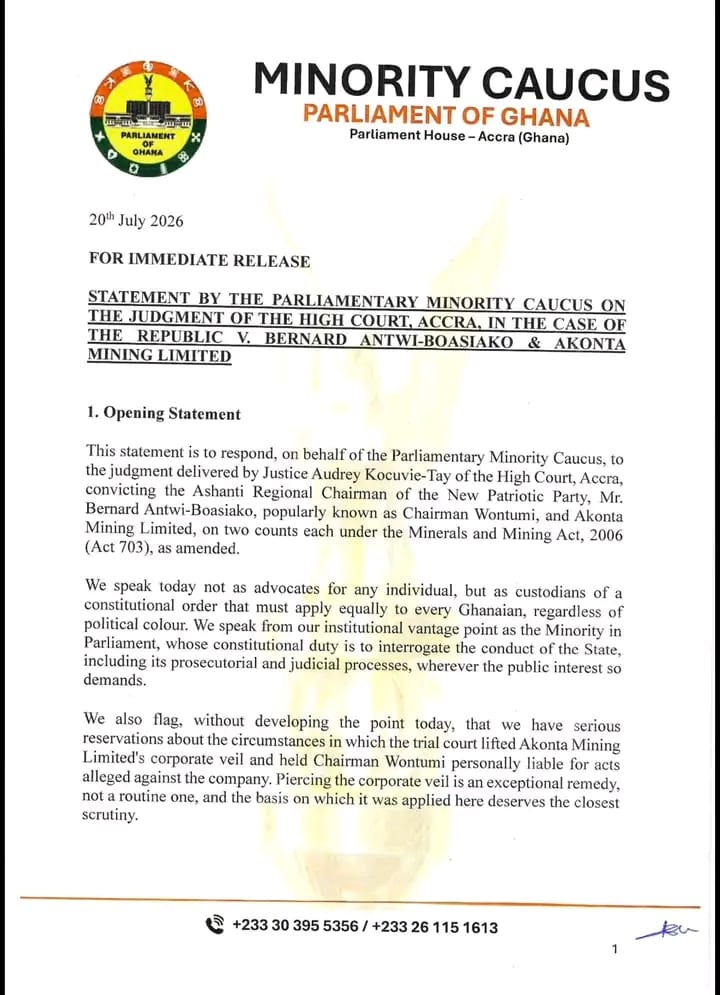
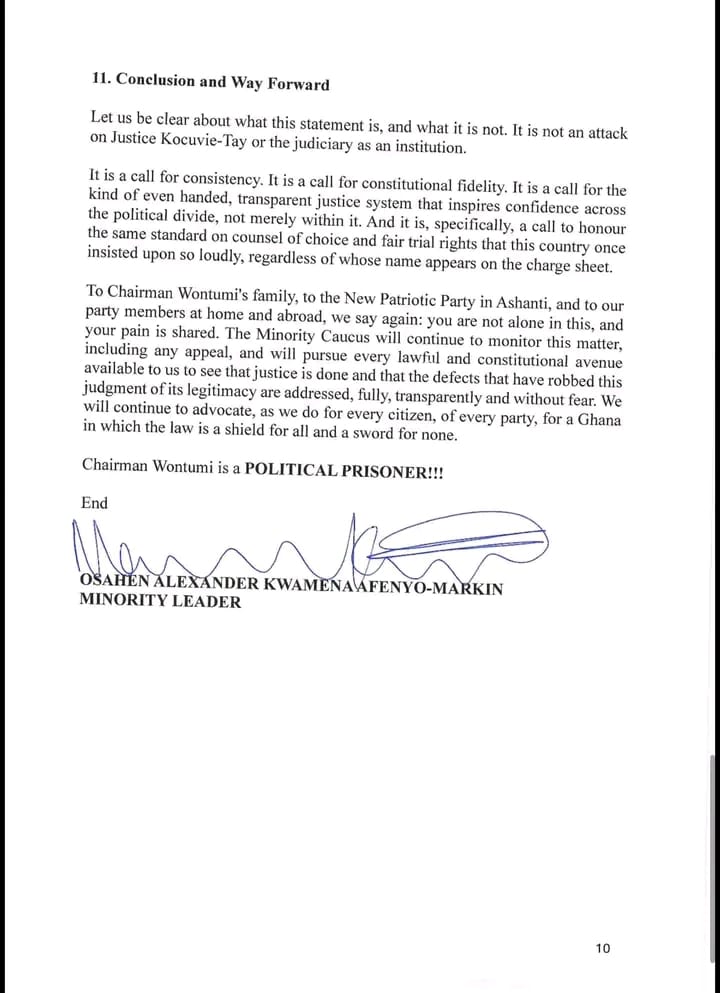
Nevertheless, the Minority Caucus vowed to challenge the ruling at the Court of Appeal and the Supreme Court, accusing procedural anomalies and selective prosecution in a press release dated Monday, July 20, 2026, and signed by Minority Leader Osahen Alexander Kwamena Afenyo-Markin.
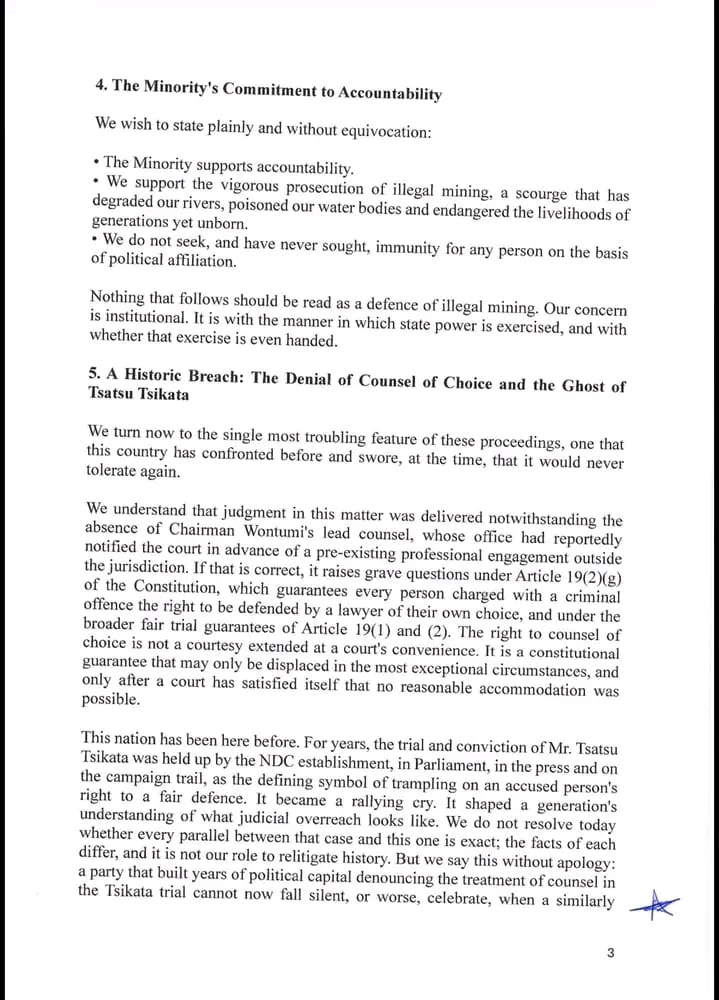
The trial court’s choice to issue judgment without Wontumi’s principal attorney, who had officially informed the court of a prior professional obligation outside the jurisdiction, is one of the Minority’s main complaints.
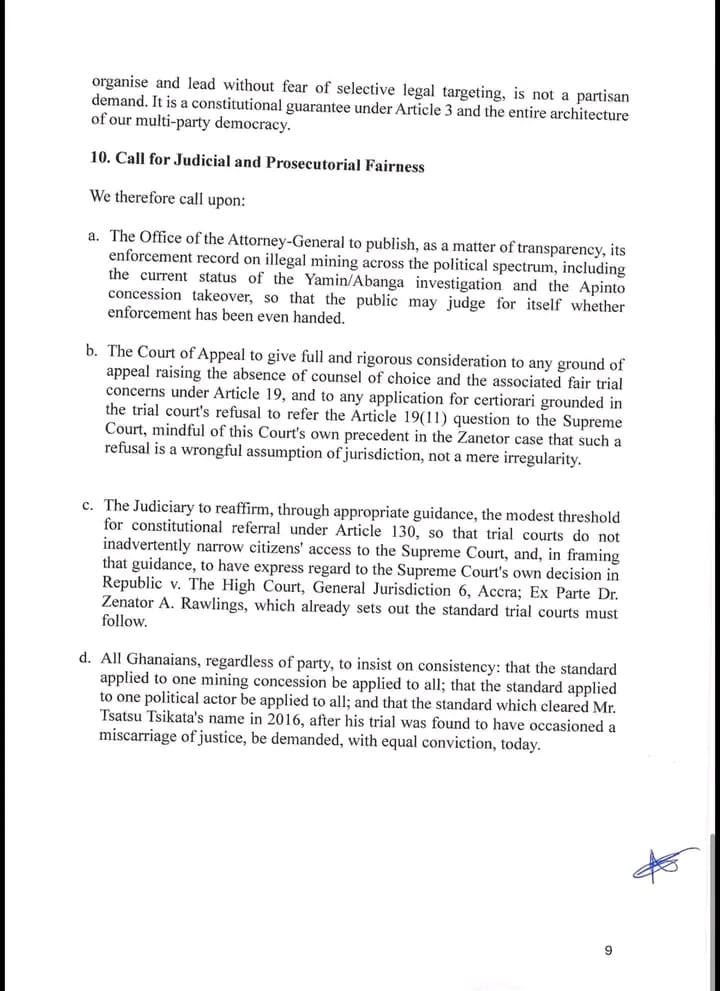
The caucus asserted that punishing the accused person without his counsel of choice violated Article 19(2)(g) of the 1992 Constitution, which grants every accused person the right to be defended by a lawyer of their choice.
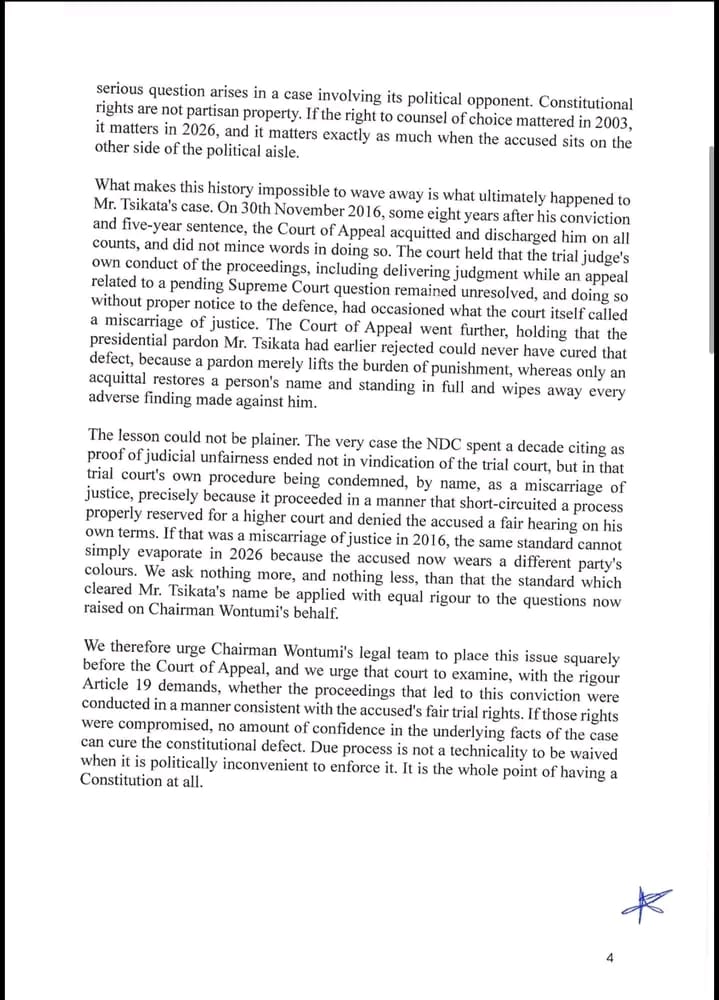
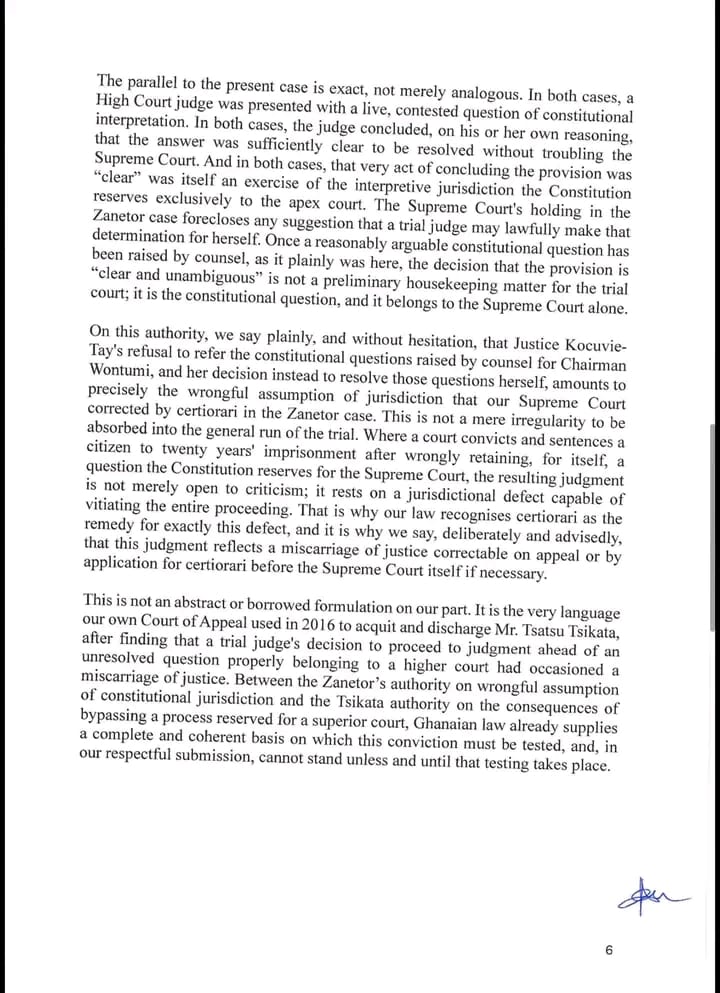
The Minority mentioned the iconic case of Tsatsu Tsikata, whose 2008 conviction was ultimately overturned by the Court of Appeal on November 30, 2016, in order to make historical comparisons. The appellate court concluded that the trial judge committed a miscarriage of justice by moving forward despite outstanding questions from higher courts.
The statement stressed that “if the right to counsel of choice was significant in 2003, it is important in 2026, and it is equally crucial when the defendant is on the opposing side of the political spectrum.”
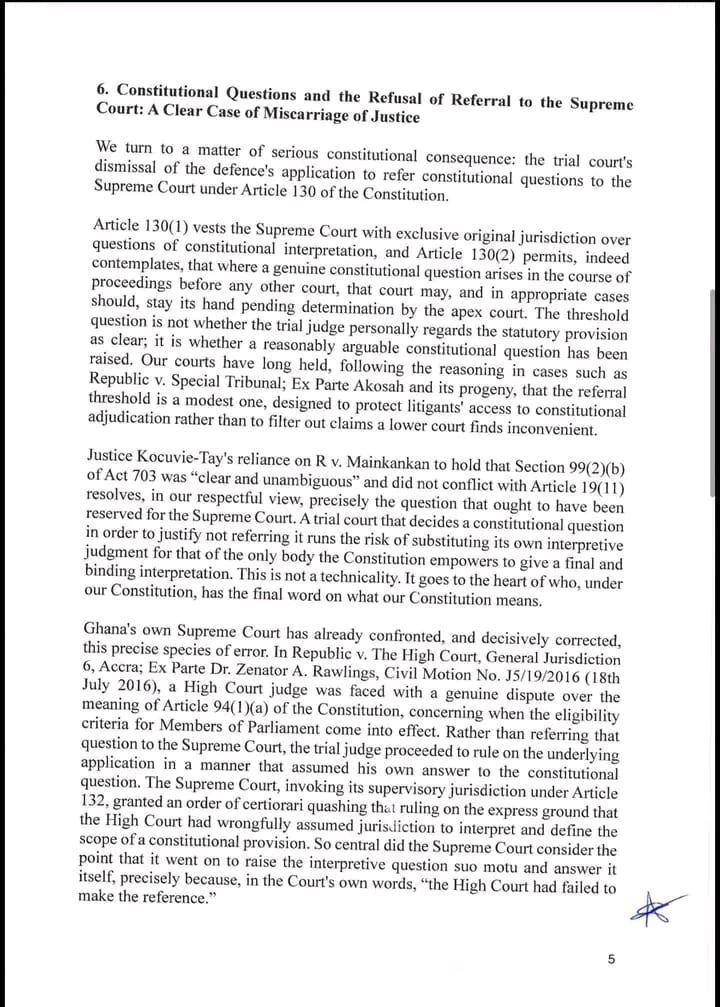
Under Article 130, the Minority also criticized Justice Kocuvie-Tay’s rejection of the defense team’s request to send constitutional interpretation questions concerning Section 99(2)(b) of Act 703 to the Supreme Court.
Citing the precedent established in Republic v. The High Court, General Jurisdiction 6, Accra; Ex Parte Dr. Zanetor A. Rawlings (2016), the caucus argued that a lower court judge commits an error by ruling that a statutory provision is “clear and unambiguous” in order to avoid referring it, since the apex court retains exclusive jurisdiction over interpreting the Constitution.
According to the statement, removing the corporate veil of Akonta Mining Limited in order to hold Wontumi personally accountable constituted a special legal remedy that called for closer appellate examination.
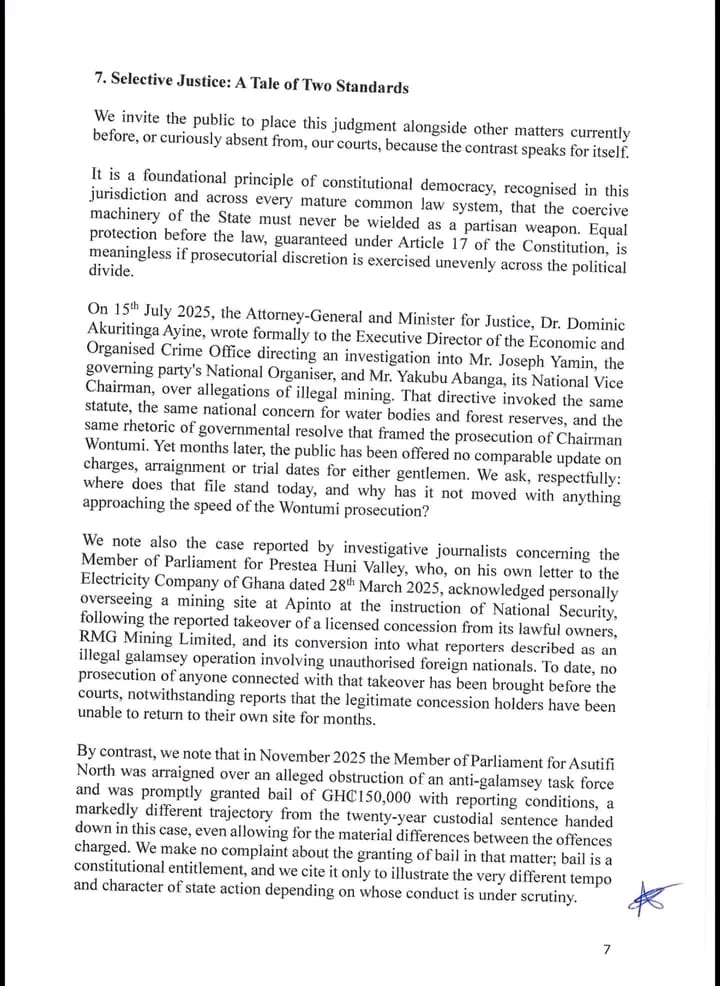
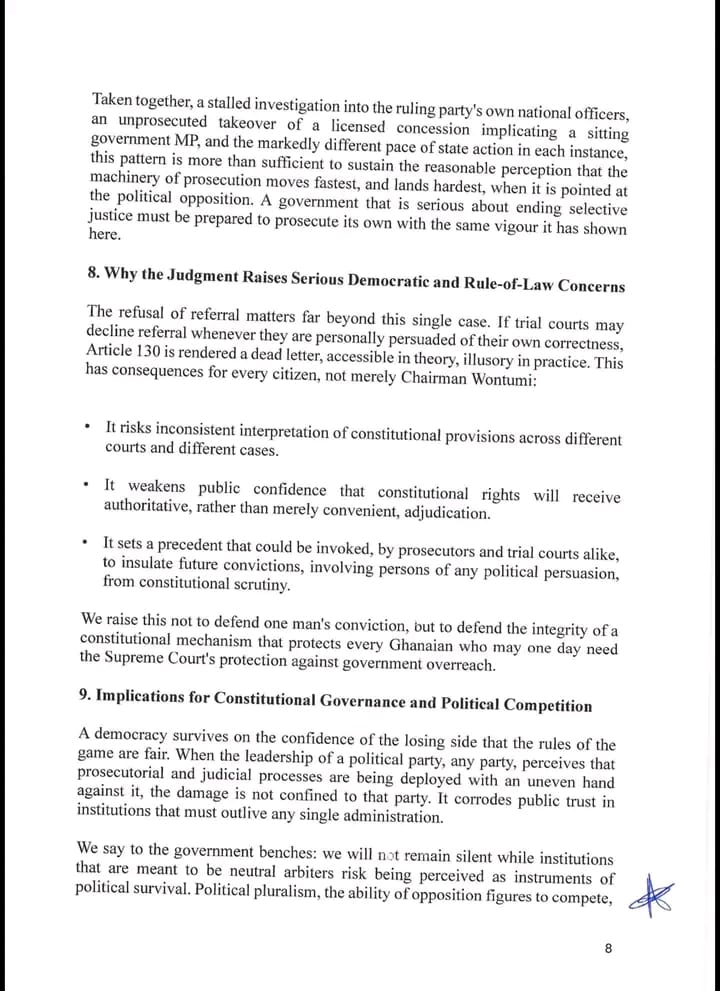
The Minority reiterated its backing for the countrywide struggle against illegal mining (galamsey), but they also charged that state prosecutors were using a dual standard based on political allegiance.
They asked why there hasn’t been any progress made in prosecuting National Organiser Joseph Yamin and National Vice Chairman Yakubu Abanga for alleged galamsey activity, which Attorney-General Dr. Dominic Akuritinga Ayine ordered on July 15, 2025.
The unprosecuted takeover of a licensed concession at Apinto involving foreign people was also mentioned by the caucus, which contrasted these delays with the speedy trial and severe custodial sentence given to the opposition regional chairman.
The Office of the Attorney-General was urged by the Minority Caucus to release its comprehensive enforcement report on unauthorized mining across the political spectrum.
The caucus promised NPP members in the Ashanti Region and throughout the diaspora of their commitment to contesting the conviction via all constitutional channels, encouraging Wontumi’s legal team to pursue certiorari and appellate remedies.
About the Author