
The New Patriotic Party (NPP) has criticized TikToker Camilla Alhassan’s one-year jail term as a “worrying sign of increasing intolerance and a criminalisation of free speech” under President John Dramani Mahama’s administration.
The 43-year-old content creator was found guilty of offensive behavior by the Accra Circuit Court on Thursday, July 16, 2026, after she admitted to posting videos that claimed, without proof, that President Mahama had buried 32 cows in ritual sacrifices in order to win the 2024 general election. The court dismissed a different allegation of digital misuse, stating that it had no authority to hear that portion of the case.
In a press statement, the opposition stated that the imprisonment of a citizen for expressive behavior poses serious constitutional issues concerning the freedom of speech guaranteed by Article 21 of the 1992 Constitution.
“The NPP’s statement stated, “The detention of a person for expressive behavior poses significant constitutional issues regarding the freedom of expression protected by Article 21 of the 1992 Constitution.” “No degree of legal officialism may hide the reality that a Ghanaian has today been robbed of her freedom in circumstances that stem from her speech. This is not the mark of a confident democracy.
The party argued that the judgment was a “troubling signal of escalating intolerance” and that the Constitution directs the President to a courtroom rather than a jail cell if he believes he has been defamed.
The party stated, “If anyone, even the President of the Republic, believes they have been defamed, our legal system offers a clear, civilised, and well-established remedy: an action in civil defamation.” “What we have instead seen is the use of the State’s coercive apparatus, which includes the Police, the Attorney General, and the criminal courts, to punish an ordinary individual.”
Additionally, the NPP condemned Madam Alhassan’s treatment, calling the events that took place at the courthouse, where she was “paraded and handled as if she were a harmful violent offender,” an insult to human dignity.
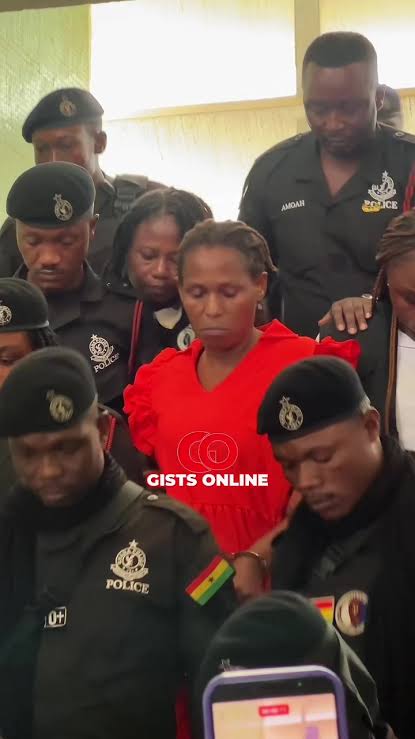
The case has reignited discussion over the use of legislation to control online expression. Since President Mahama took office, the Media Foundation for West Africa (MFWA) has documented 14 arrests related to false news and hateful speech in the previous 16 months. This is almost twice as many arrests as during the previous administration’s whole eight-year term.
The MFWA has voiced great worry about what it terms the growing “weaponization” of statutes like Section 76 of the Electronic Communications Act and Sections 207 and 208 of the Criminal Offenses Act in order to arrest and prosecute individuals for comments made on social media and in public.
In addition, the NPP has appealed to the diplomatic community to support democratic principles and take note of the developments. The party has also stated that it would support all legal efforts to appeal the verdict and punishment right away.
In the interim, the government has upheld the enforcement measure, stating that it is an essential reaction to the boom of hazardous and irresponsible material on social media, not a crackdown. Samuel Nartey George, the communications minister, stated a few days ago that although free expression is a fundamental component of government, the government will not tolerate “the weaponization of fake news.”
About the Author