
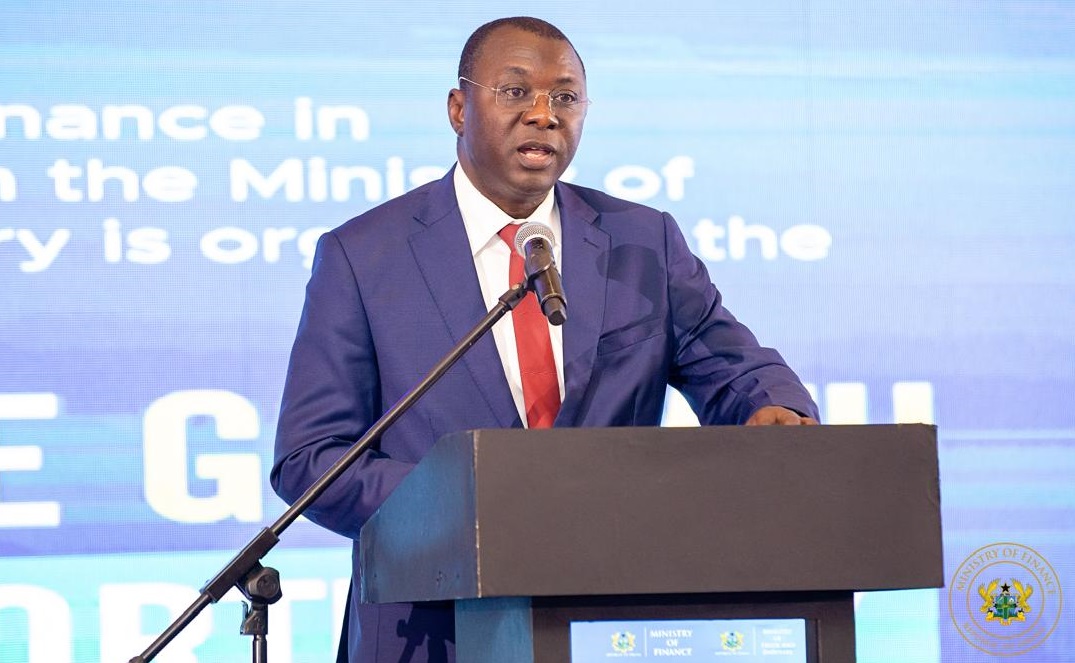
Former Finance Minister Dr. Mohammed Amin Adam has cautioned that as losses at the Bank of Ghana (BoG) grow, Ghana may experience increased fiscal pressure, with recapitalization likely to put more strain on government finances and raise public debt.
The remarks are made in response to the central bank reporting a GH15.63 billion loss for the 2025 fiscal year.
This represents a significant drop from the GH9.49 billion loss reported in 2024. The approximately 65% year-over-year rise occurs at a period when important macroeconomic variables, notably inflation and exchange rate volatility, have shown indicators of stabilization.
Dr. Amin Adam wrote to the IMF on May 2, 2026, warning that the central bank’s deteriorating financial health represents a clear threat to the nation’s fiscal perspective, particularly as Ghana prepares to leave its Extended Credit Facility program.
“The Bank of Ghana’s negative equity is basically a postponed fiscal expense,” he stated.
He highlighted a sharp decline in the bank’s balance sheet, with negative equity increasing significantly in 2025, and cautioned that the state will eventually be responsible for fixing the central bank’s financial situation.
“The issuance of bonds by the government to recapitalize the Bank may increase the gross public debt, future interest obligations, or rollover pressures,” he added.
The extent of the issue has expanded beyond what was anticipated by earlier projections linked to an existing recapitalization plan that the Finance Ministry and the central bank have reached an agreement upon, according to Dr. Amin Adam.
“Without an extension of the capitalization time, the fiscal cost to the government can only rise, and this position is currently worse at negative GH96.28 billion,” he stated.
He added that the issue might be deepened and further fiscal pressure caused by increasing operational costs at the central bank, notably those associated with monetary policy interventions.
He warned that if the expenses of sterilization continue to outstrip the Bank’s recurring income, future central bank losses may need further government assistance, which could “undermine fiscal consolidation gains achieved under the programme.”
With legislators under pressure to maintain progress in debt sustainability and macroeconomic stability, the worries occur at a crucial time as Ghana gets ready to exit its IMF-backed program.
Dr. Amin Adam urged the IMF to consider the central bank’s financial situation as a major risk to Ghana’s economic future and emphasized that the cost of recapitalizing the Bank of Ghana must be taken into account in all future fiscal planning.
About the Author