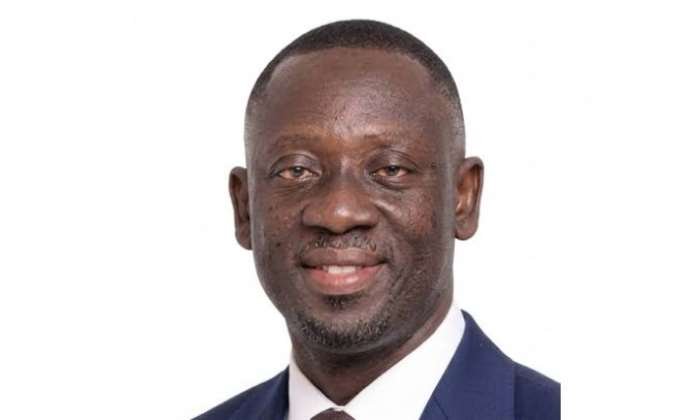
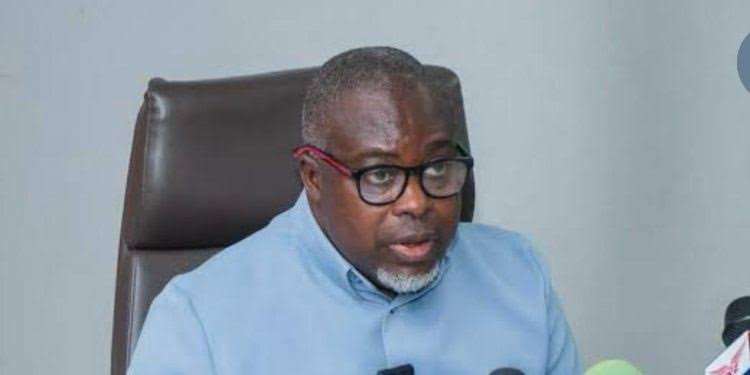
Commissioner-General Anthony Sarpong informed Parliament that the Ghana Revenue Authority (GRA) has recouped GH¢1.3 billion of the approximately GH¢1.4 billion owed by the Electricity Company of Ghana (ECG) in outstanding Value Added Tax (VAT).
The Commissioner-General told the Public Accounts Committee of Parliament that the ECG had had difficulty turning over all of the VAT it collects on the state’s behalf.
Because the power distributor claimed that its collection systems did not enable it to recoup all of the VAT it had levied on consumers, the outstanding sum had built over time, he said.
But according to Mr. Sarpong, the GRA has worked with the ECG to resolve the problem and has made substantial progress in collecting the unpaid money.
Of the GH¢1.4 billion, we have recovered GH¢1.3 billion as of today, which is around 86.56 percent of the total, he informed the committee.
He also said, “We have made some positive advancement and are still working with them to better the situation.”
During the committee session, Mr. Sarpong said that the GRA was attempting to reclaim unpaid income from the ECG, among other organizations.
Before remitting the money to the authority, he claimed, the firm was in charge of collecting and charging VAT from consumers.
He said, though, that the ECG had continuously maintained that it was unable to recover the total amount of VAT imposed on all customer categories.
“They have consistently brought up the issue during their procedures that they are unable to collect all of the VAT they impose, and as a result, they pay based on their ability to collect,” he stated.
Over time, the outstanding debt had risen as a result of the difference between the charged and collected amounts, he stated.
“Every month, we have a little collection of what they levy, and it tends to accumulate over time,” he explained.
According to Mr. Sarpong, the GRA and the ECG have talked about fixing the issue and improving the tax’s collection and remittance.
Given that the tax components were clearly shown on electricity invoices and receipts, the committee posed questions as a result of the disclosure as to why the ECG was unable to collect all of the VAT imposed to customers.
The committee’s chairperson, Abena Osei Asare, questioned the company’s reasoning, emphasizing that consumers could view the VAT element when they bought power.
“Check the invoices the moment you purchase power. They reveal the VAT components and then they reveal them to you. So, why are they asserting that they are unable to collect them in every case? I don’t understand,” the chair inquired.
Mr. Sarpong then said that he wasn’t speaking for the ECG, but rather explaining the company’s position as it had been presented to the GRA.
“Madam Chair, since I am not speaking for ECG, let me phrase it this way,” he stated.
According to his explanation, the company’s argument was that its current collection methods prevented it from recouping all of the VAT it had levied on all classes of customers who were subject to paying the tax.
“So they pay what they collect. Unfortunately, what they’ve collected is always less than what they’ve built, and that keeps piling up,” he added.
Mr. Sarpong said that the authority had increased its engagement with the ECG over the previous year and into 2026, which has led to the recovery of most of the outstanding sum discovered.
According to the Commissioner-General, the recovered GH¢1.3 billion represents around 86.56% of the GH¢1.4 billion owing.
According to him, the GRA will keep collaborating with the ECG to make up the difference and raise the amount of VAT that is collected and sent to the government.
The disclosure draws attention to the difficulties the revenue body encounters in guaranteeing that all taxes collected by institutions on behalf of the government are properly accounted for and paid over.
When the remaining outstanding amount will be completely reimbursed has not been stated by the GRA.
About the Author