
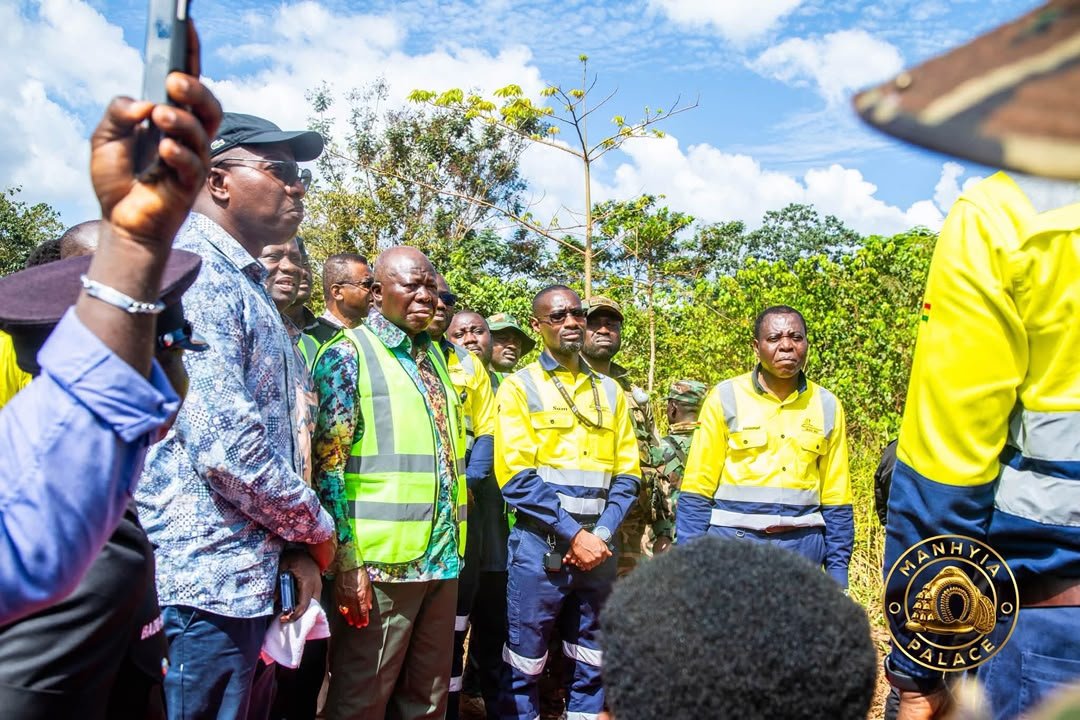
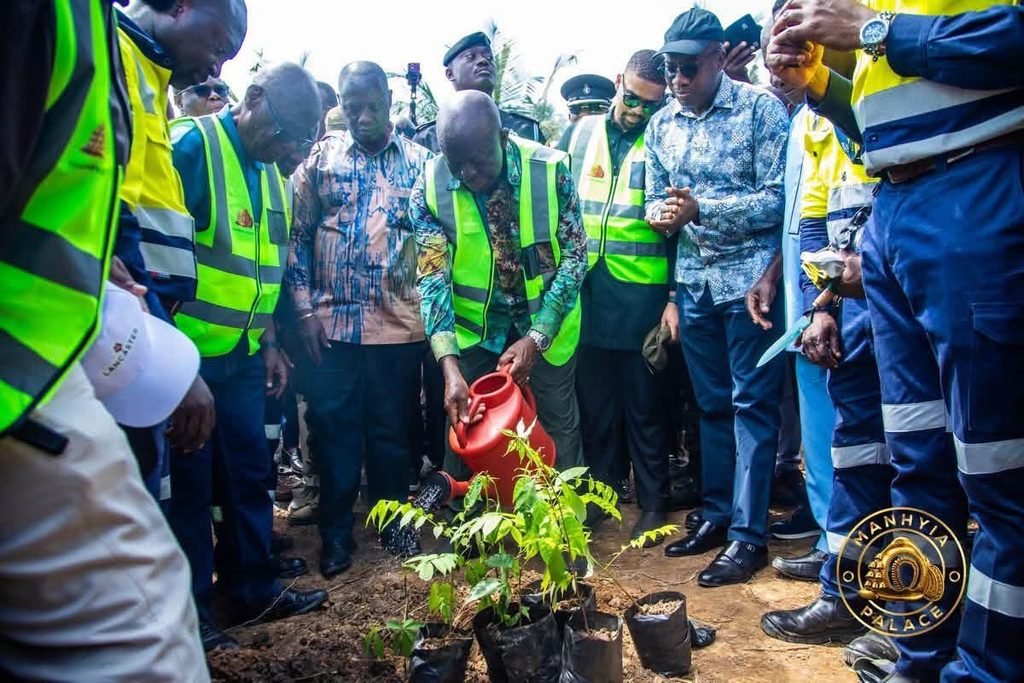
To start a major initiative to restore lands and the river that were destroyed by illegal mining, the Asantehene, Otumfuo Osei Tutu II, has planted trees at the Jimi River close to Obuasi.
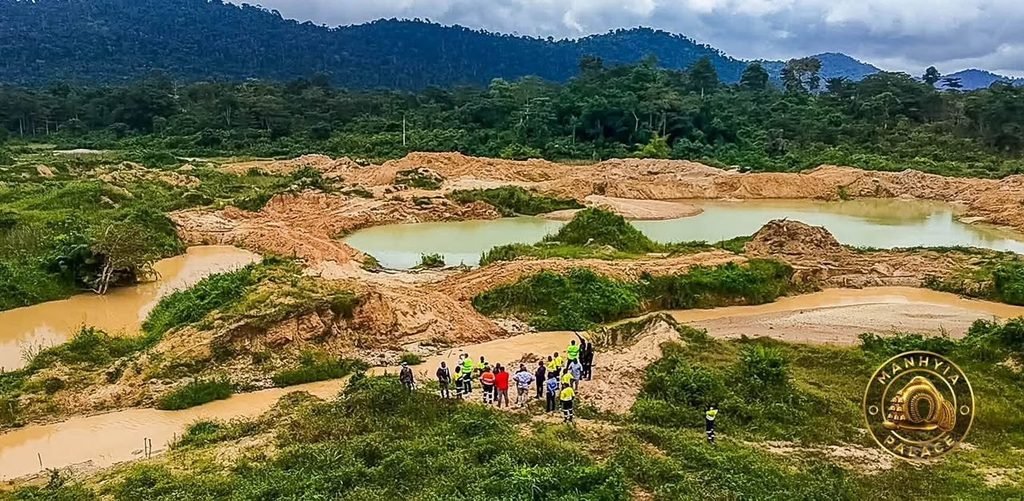
In order to monitor ongoing activities and symbolically plant trees to signify the restoration, he went to Lot 1 of the Jimi Land Reclamation and River Watercourse Rehabilitation Project, a 153-hectare pilot under the Green Ashanti Initiative.
The region, which is home to a significant water supply for the Adansi enclave, has been severely harmed by galamsey, with plants removed, soils polluted, and open pits remaining.
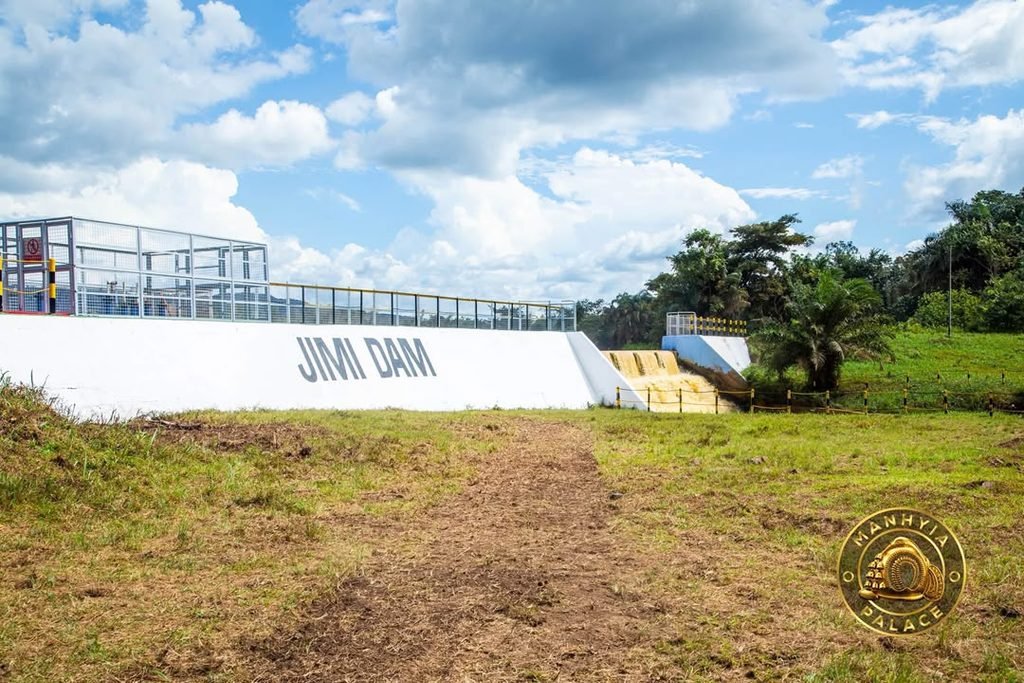
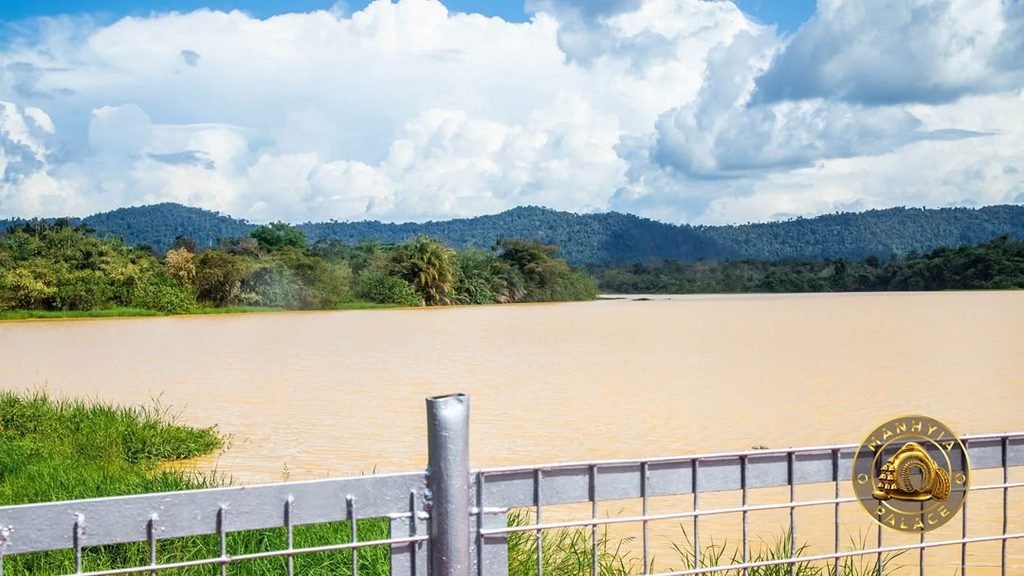
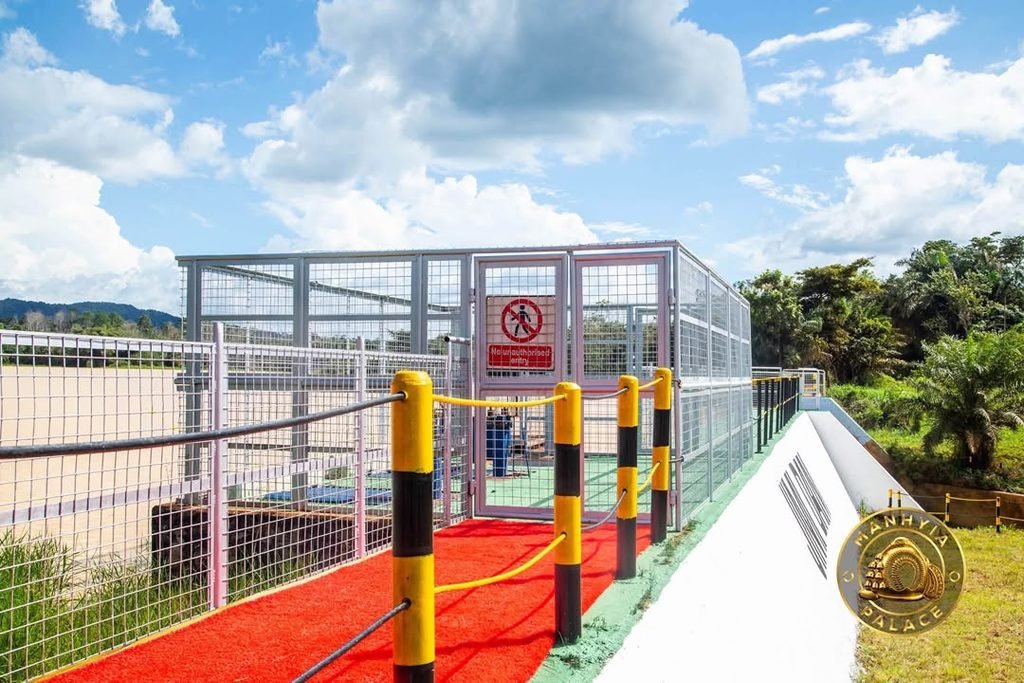
Downstream, the Jimi Dam and the Jimi River are in danger from the contamination, which filters water for more than 200,000 residents of Obuasi and the Adansi region.
Illegal miners have changed the course of the river at Tasliman by depositing heaps of sand, which has resulted in severe siltation and an increase in turbidity.
The dam’s volume is declining, which necessitates water distribution to the villages, in addition to the rising turbidity levels, which have raised the cost of water purification.
According to Ing. Eric Broni, Director of Engineering at Anglo Gold Ashanti, the impact is already impacting water supply. “There is a chance that this year will see a reduction in water extraction. Abstraction decreases as the water level drops, but our cost rises. Even though we treated less last year, we still spent approximately $584,000 on water treatment. Because we must ration water to other communities, it is turning into a concern,” he stated.
The Jimi project, spearheaded by the Ashanti Green Initiative with Oheneba Nana Kwaku Duah at its helm and Manhyia Palace providing guidance and support, is piloting a six-step restoration model: replenishing trenches, recontouring refuse heaps and terracing slopes, mitigating heavy metal pollution, putting in drainage and erosion control systems, rejuvenating topsoil, and replanting with kenaf.
Due to the possibility of residual contamination and the need to offer alternative income for local farmers, kenaf, a fast-growing fiber crop used for sacks, ropes, eco-composites, and other purposes, has been favored over food crops. The EPA will also oversee the restoration and replanting of the Jimi River and its buffer zones.
Anglo Gold Ashanti, which offers operational and technical support, was one of the Asantehene’s allies. Samuel Boakye Pobee, the managing director, stated, “We are glad to be partners in the battle against land degradation and pleased by the government’s backing. Obuasi still considers the Jimi important. More people outside the mine than inside receive water from it. “
Emmanuel Armah-Kofi Buah, Minister of Lands and Natural Resources, stated that galamsey has damaged roughly 8,000 hectares of the 188 forest reserves, with only 150 hectares restored to date.
“Partnership is the only way government can succeed. 80% of water comes from forest reserves, and this is crucial to human survival. Government is committed to this partnership. The Asantehene’s commitment serves as a model for all chiefs,” he stated.
Mahama Ayariga, Minister for Local Government, Chieftaincy, and Religious Affairs, called the undertaking a “national crusade.”
“What you are doing is the initiation of a national campaign for traditional leaders to work with government, mining businesses, and civil society organizations to lead the restoration of degraded areas,” he said.
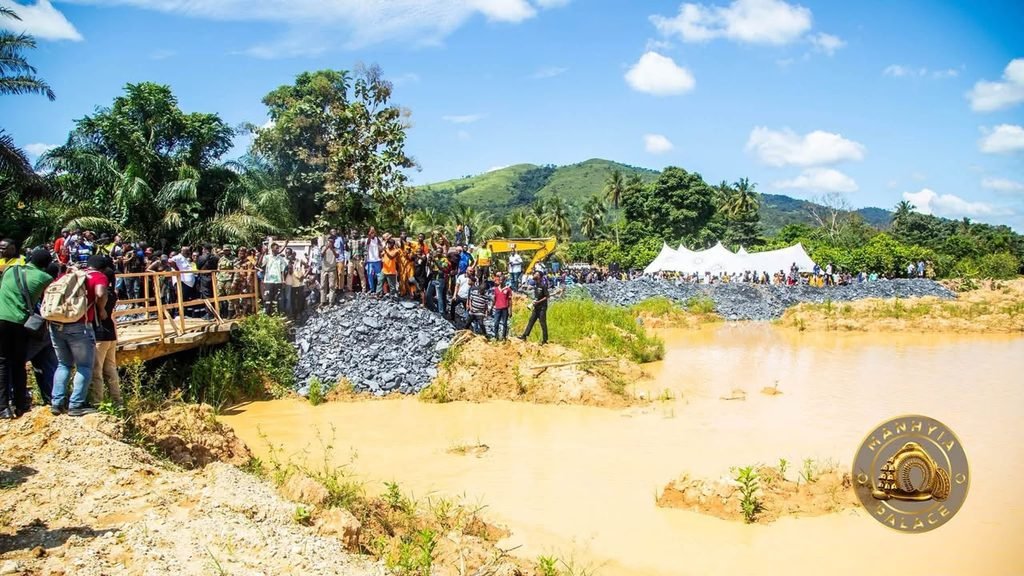
According to organizers, the Jimi Green Ashanti tree planting is more than just symbolic. It signifies the launch of a model that can be replicated to revitalize Ghana’s deteriorated lands, preserve fresh water, and rebuild livelihoods.
Before proceeding to Lot 1 for the tree planting and reclamation site inspection, and then to the Jimi Dam, the Asantehene received a briefing at Anglo Gold Ashanti in Obuasi.
About the Author